

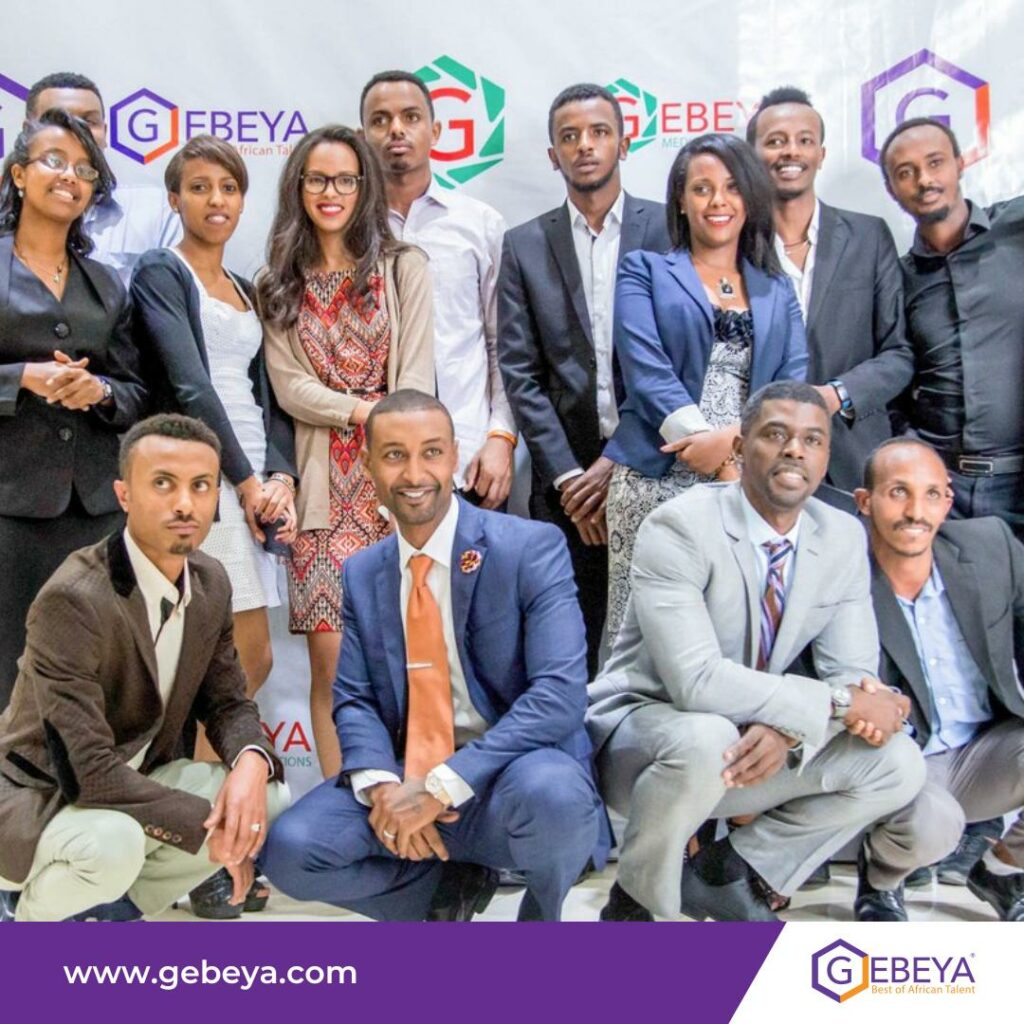
Gebeya is joining forces with partners to bridge the service identity gap—the space between skill and visibility–as millions of Africans offer services but lack access to the digital infrastructure to present themselves professionally.
In August, 29-year-old Zainab Yusuf was scrolling through her feed on X, the social network still known to many as Twitter, when a post caught her attention: someone showing off a polished digital storefront, the kind she had long imagined for herself as a pan-African event moderator and community builder. The caption mentioned a name unfamiliar to her—Gebeya.
“I clicked out of curiosity,” Yusuf, based in Nigeria’s capital Abuja, recalls to FORBES AFRICA. “And I was amazed by how organized everything looked.”
Within minutes, she had downloaded the app after a ‘’quick research’’. By the following month, she had used it to redesign the way she offered her services, even launching a 50% discount campaign to attract new clients.
“It was fantastic,” she says. “The platform helped me look more professional, connect with clients easily, and feel visible.”
Yusuf’s experience could be one of thousands, but it captures similar cases happening across Africa’s digital landscape.
What began nearly a decade ago as a coding academy in Ethiopia has evolved into a continental platform—one that hopes to empower not just developers, but everyone who sells a service, from stylists and tutors to consultants and caterers.
Today, Gebeya calls itself a “platform technology company empowering Africa’s service economy”. Behind that ambitious phrase lies a bigger bet: that the next wave of Africa’s economic transformation will come not from the factories of industrialization, but from the millions of self-employed workers turning their phones into offices and their skills into livelihoods.
When Gebeya was founded in 2016, Africa’s challenge was clear: too few skilled developers to meet the growing demand for tech talent. Its founders, Amadou Daffe and Hiruy Amanuel, set out to fix that by training software engineers and linking them to companies seeking talent.
The idea worked—at first. Hundreds of young coders graduated from Gebeya’s programs, many landing jobs with banks and startups from Kenya to Senegal. But success soon exposed another gap.
“Our graduates were skilled. But they couldn’t find enough work,” the company disclosed in a document shared with FORBES AFRICA.
The company pivoted, building a talent marketplace to match African developers with international employers. Yet even that had limits. “A marketplace serves hundreds, maybe thousands, but Africa has millions of talented people,” it discovered.
That realization marked the beginning of Gebeya’s reinvention—from a coding academy to a suite of software tools designed to help Africans formalize, manage, and expand their businesses online. The mission, the company said, never changed: “to empower Africans”. What changed was how.
In the years since, Gebeya has rolled out a series of software-as-a-service (SaaS) products aimed at Africa’s rapidly expanding service sector. There’s Gebeya Jitume used by Yusuf, which helps freelancers and small business owners manage customers, payments, and bookings—“almost like a Customer Relationship Management (CRM) tool for side-hustlers,” says Menna Tafesse Thobejane, Gebeya’s Chief Impact Officer, to FORBES AFRICA.
Then there’s Gebeya Connect, a kind of Google for local services, where clients can find everything from a barber in Kenya’s capital Nairobi to a nanny in Nigeria’s commercial capital Lagos. Gebeya Jenga lets entrepreneurs build their own digital marketplaces—“think Shopify,” Thobejane attempts to describe, “but for services, not products.”
And now comes Gebeya’s most ambitious product yet: Gebeya Dala, an AI-powered app builder that allows anyone, even those who have never written a line of code, to create a working digital platform by describing it in their own language.
“You could prompt in Amharic, Swahili, and other languages. You just say what you want, and it builds it for you,” Thobejane explains.
In tech circles, the rise of ‘vibe coding’—using natural language and AI prompts to generate software—has been hailed as the next frontier in democratizing development.
“While the world is excited about ‘Vibe Coding,’ the conversation misses a crucial point: the existing tools aren’t built for us,” Daffe said in a statement. “We built Gebeya Dala to address the real challenges Africans face every day—localization, accessibility, the lack of credit cards, the barrier of forex, and the fundamental need to build in your own language.”
The platform is still in beta, but early testers include teenagers, gig workers, and small business owners with no formal tech background. “Our cousins, our friends are able to, within minutes, create platforms that have clear solutions for connecting clients to whatever kind of services they have,” Thobejane shares.
For the Head of Infrastructure, Kaleab Girma, the excitement is about more than technology. It’s about agency. “Together, we can ensure that the 14-year-old in a remote village with a big idea and a basic phone has the same power to create as anyone else in the world,” Girma says in a statement.
Gebeya’s evolution mirrors a wider shift across the continent. Africa’s fastest-growing sector isn’t manufacturing or agriculture—it’s services, which already make up more than half of gross domestic product (GDP) in many countries. Yet much of that work remains informal, untracked, and offline.
Gebeya’s bet is that digital tools, tailored for African conditions, can help change that.
“We always say we wanted to replicate ourselves 100 times,” says Thobejane. “The future of jobs is ever-changing. What was needed yesterday may not be needed today. AI overnight is changing the way we work.”
Through its partnership with the Mastercard Foundation, Gebeya has been supporting small and medium-sized enterprises (SMEs) in Ethiopia’s gig economy. The joint initiative, known as Mesirat—meaning “to work” in Ethiopia’s official language Amharic—has so far reached more than 100,000 youth, with a goal of connecting one million to opportunities.
Under the program, entrepreneurs use Gebeya Jenga to create digital platforms linking service providers to customers. So far, 66 businesses in 13 sectors have joined, ranging from logistics to beauty and catering.
Beyond technology, Gebeya also provides business development support, access to finance, and training in digital tools. “All of these are plugged in so that it could equally create this enabling environment for the businesses to grow,” Thobejane explains.
That includes working with banks to design startup-friendly loan products and partnering with women-led organizations to improve gender participation in the gig economy.
Reaching millions of Africans, however, is no small task. Internet access remains patchy in many regions; digital payments are still uneven; and trust in online marketplaces is fragile.
Gebeya’s strategy relies heavily on partnerships—with telcos, governments, schools, and development institutions—to bridge those gaps.
The company has already worked with telecommunications provider Safaricom to launch the Talent Cloud program also in Ethiopia and is now expanding into Nigeria and South Africa. It’s also seeking alliances with universities and non-governmental organizations (NGOs) to integrate Gebeya Dala into digital literacy programs.
The goal, it says, is to reach “a million teenagers and adults across Africa”.
In a world where technology often flows from the Global North downward, Gebeya’s rise represents a reversal—innovation built in, and for, Africa.
“The future of the service economy in Africa is bright as long as it is being enabled through technology solutions,” Thobejane says. “Africa doesn’t need to constantly receive from outside, but rather Africa has a lot to give outwards. So, I think the service economy is truly where that can be done.”
That idea drives Gebeya’s ethos. The company’s name, Amharic for ‘marketplace’, now seems active: it’s less about coding jobs than about building ecosystems.
And its approach to AI remains grounded. While global tech giants race to build ever-larger models, Gebeya is betting on context—smaller, multilingual, locally tuned systems that understand the continent’s nuances.
In the end, Gebeya’s impact may not be measured only in jobs created or startups launched, but in how it redefines the meaning of work itself.
For Yusuf in Abuja, empowerment doesn’t look like a factory line or an office cubicle. It looks like a neatly designed digital profile that tells clients who she is and what she can do.
“Gebeya has been like a mixture of learning, growing, and making impact,” Yusuf shares.
And perhaps that’s the quiet revolution Gebeya is leading: giving Africa’s service providers—long informal, often invisible—the tools to be seen.
Content retrieved from: https://www.forbesafrica.com/current-affairs/2025/12/02/from-coding-dreams-to-the-service-economy-how-this-platform-tech-company-is-helping-reimagine-africas-digital-workforce.
No responses yet